James McNeill Whistler
The Art of Restraint
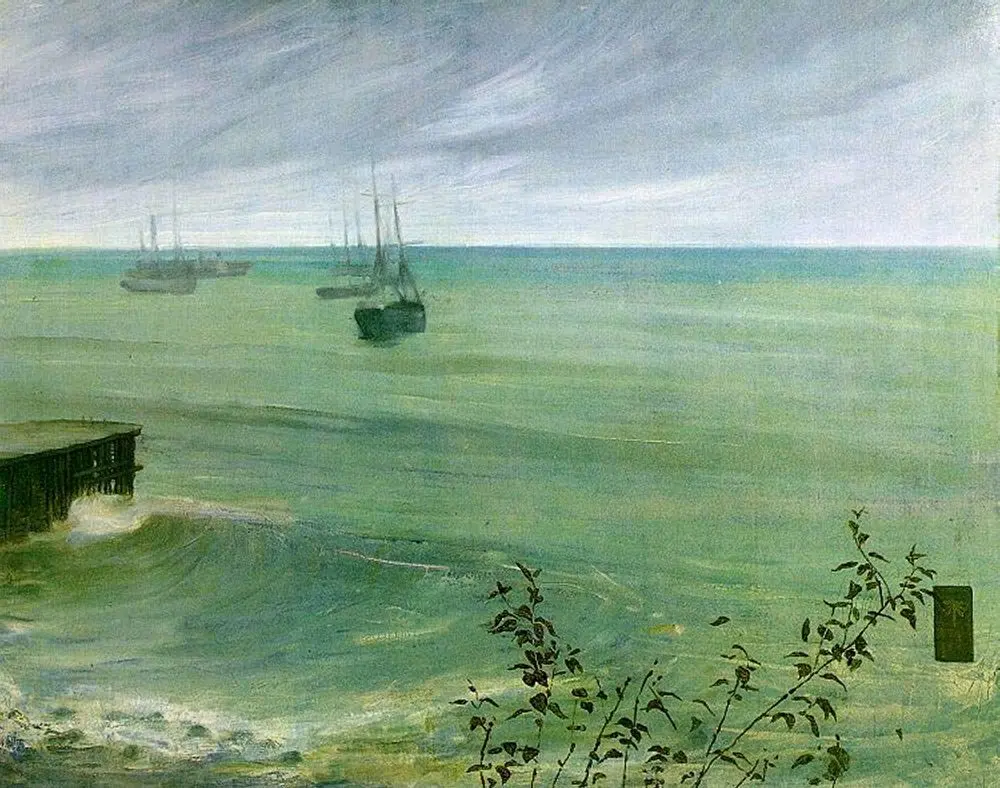
Whistler didn’t name his paintings after places. He named them after music. Nocturnes. Arrangements. Harmonies. That wasn’t pretension — or not only pretension. It was instruction. He was telling you how to look.
Don’t search for the subject. Don’t try to locate yourself on a map of the Thames or identify the bridge or count the figures on the bank. Let it move through you the way a piece of music does, without demanding that it mean something you can carry away in words.
His Nocturnes ask a lot. The city is there but barely. A wash of blue-grey, a suggestion of light on water, a distant firework already fading. The bridges are more feeling than structure. He worked until the painting had exactly what it needed and then he stopped, and that stopping point — that refusal to add one more mark — was where his real intelligence lived.
Ruskin called it flinging a pot of paint in the public’s face. Whistler sued him, won a farthing, and spent the rest of his money on the legal costs. He knew the price and paid it without much visible regret.
What bothered people wasn’t the looseness. It was the confidence of it. He wasn’t apologizing for what he’d left out. He wasn’t gesturing toward a more finished version that might have existed. This was the painting. The empty space wasn’t empty — it was doing something. The mood wasn’t a byproduct of the image; it was the image.
That idea — that a painting doesn’t owe you a story, that tone and atmosphere are sufficient, that less can be doing more — felt radical then. It feels obvious now, which is usually the sign that someone won the argument permanently.
His paintings are still quiet. They still don’t explain themselves. And they still hold your attention longer than they have any right to, given how little is there.