John Atkinson Grimshaw
The Hour Before
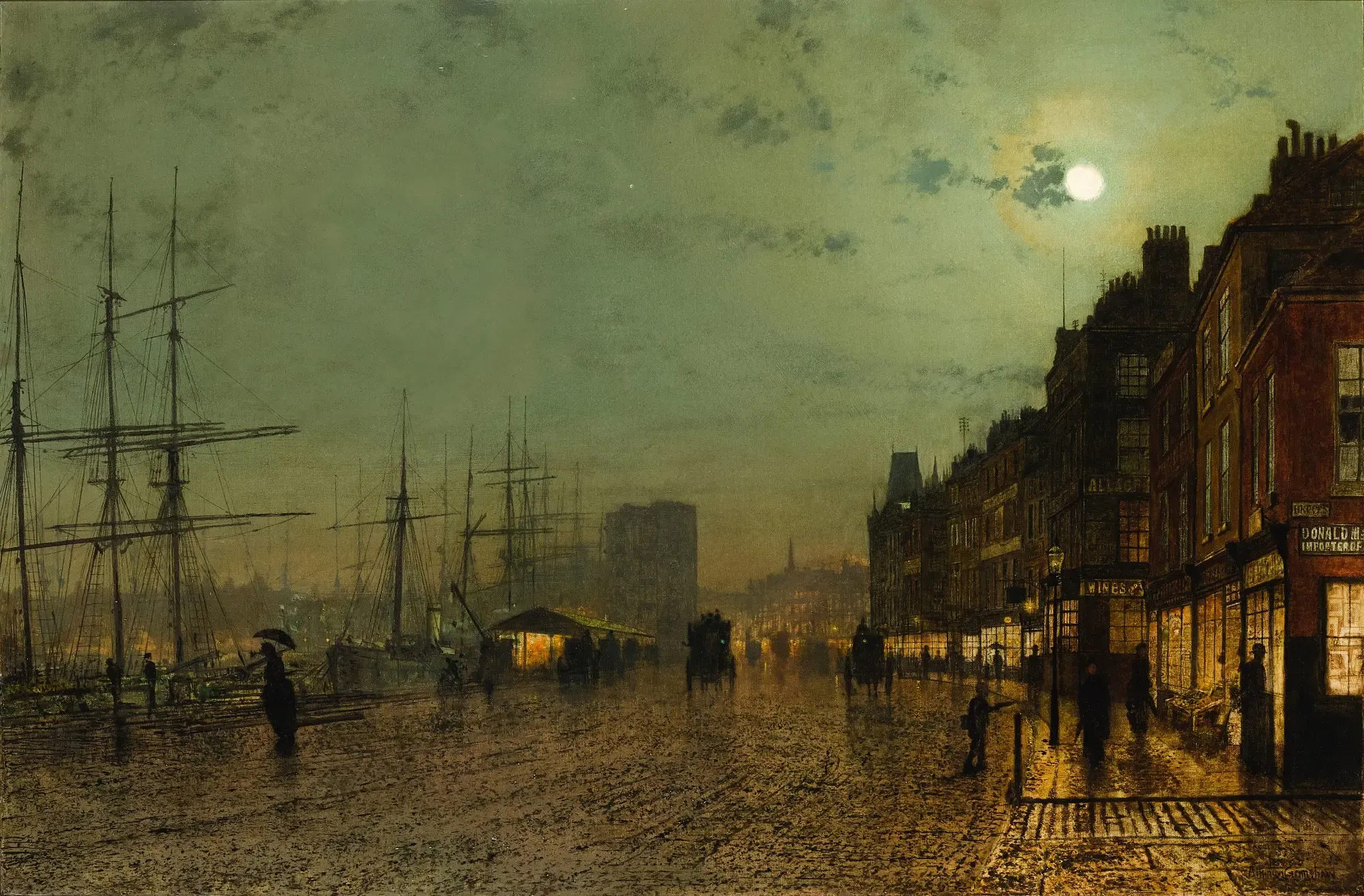
There is a specific moment Grimshaw returns to again and again. Not night exactly, and not evening. The hour between them, when the gas lamps are lit, but the sky hasn’t fully surrendered its light. The streets are wet. The figures, if there are any, are moving away from you, already half gone.
He painted this moment so many times and so well that it begins to feel less like a subject and more like an obsession.
What draws him there is harder to name. The streets in these paintings aren’t empty in any simple sense. Something has just happened, or is about to. The light on the wet pavement holds too much colour for nothing to be going on. The reflections are too precise, too insistent. The world has gone quiet, but it hasn’t gone still — there’s a charge in it, a held breath, the particular tension of a moment suspended just before it resolves.
Grimshaw understood something about artificial light that painters before him hadn’t fully explored. Gas lamps don’t illuminate — not really. They create pools of visibility surrounded by deeper dark, and in that contrast, the ordinary becomes strange. A familiar street becomes a place where anything might happen. The mundane and the mysterious occupy exactly the same space.
His technique was precise to the point of being almost photographic, and that precision matters. The sharpness of the detail grounds you in something real, something recognisable, and then the mood moves through it like weather. You can see every cobblestone and still feel completely uncertain about what you’re looking at.
That tension — between the seen and the felt, between the ordinary and the charged — is what makes these paintings last.
He never shows you what happens next. The figure disappears around the corner. The door stays closed. The street remains wet and lit and waiting. And you stay with it, caught in the same suspended moment, unable to move on quite as quickly as you expected.