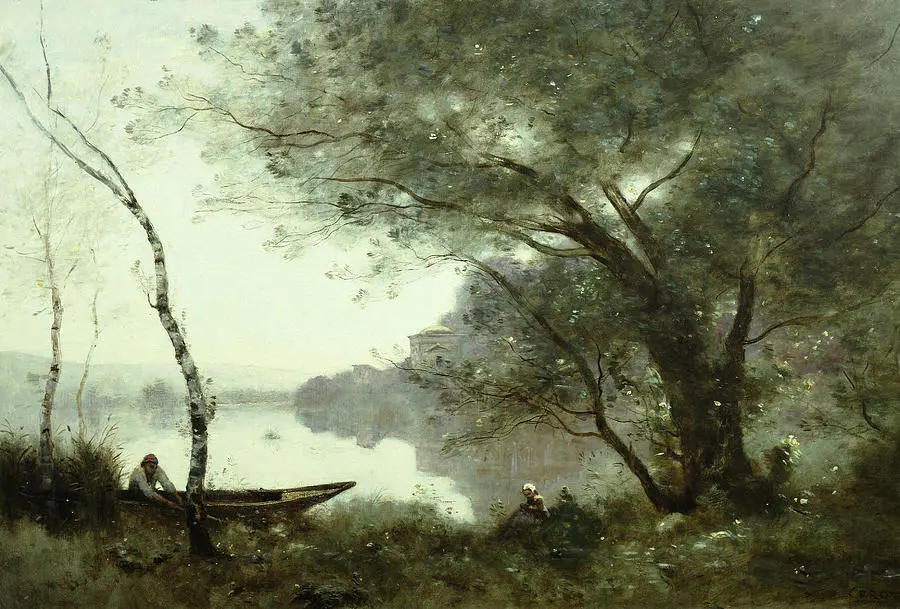
Jean-Baptiste-Camille Corot
The Memory of Landscape
There’s a difference between painting a place and painting the feeling of returning to it years later, when the details have softened, and only the mood remains.
Corot painted the second thing.
His trees don’t have edges so much as suggestions. They drift into the sky rather than ending against it. The reflection on a pond feels as solid as the bank above it. He worked in silvers and muted greens, avoiding the kind of contrast that would force the eye to a specific point and hold it there. Nothing insists. Everything breathes.
The Impressionists learned from him — you can see his influence clearly in how they approached light and looseness. But where they were after immediacy, the specific flicker of a particular afternoon, Corot was after something slower. The stillness that sits underneath a place rather than moving across its surface. Not the moment, but the mood that outlasts it.
There’s a useful word for what his paintings feel like — elegiac. The quiet feeling of something passing, or already passed. You look at a Corot landscape, and you don’t feel like a visitor admiring a view. You feel like someone who was here before, a long time ago, trying to remember it accurately and finding that the feeling is intact even when the details have gone.
He wasn’t documenting nature. He was preserving the memory of it.
And memory, as it turns out, is softer than the thing itself — and sometimes more true.