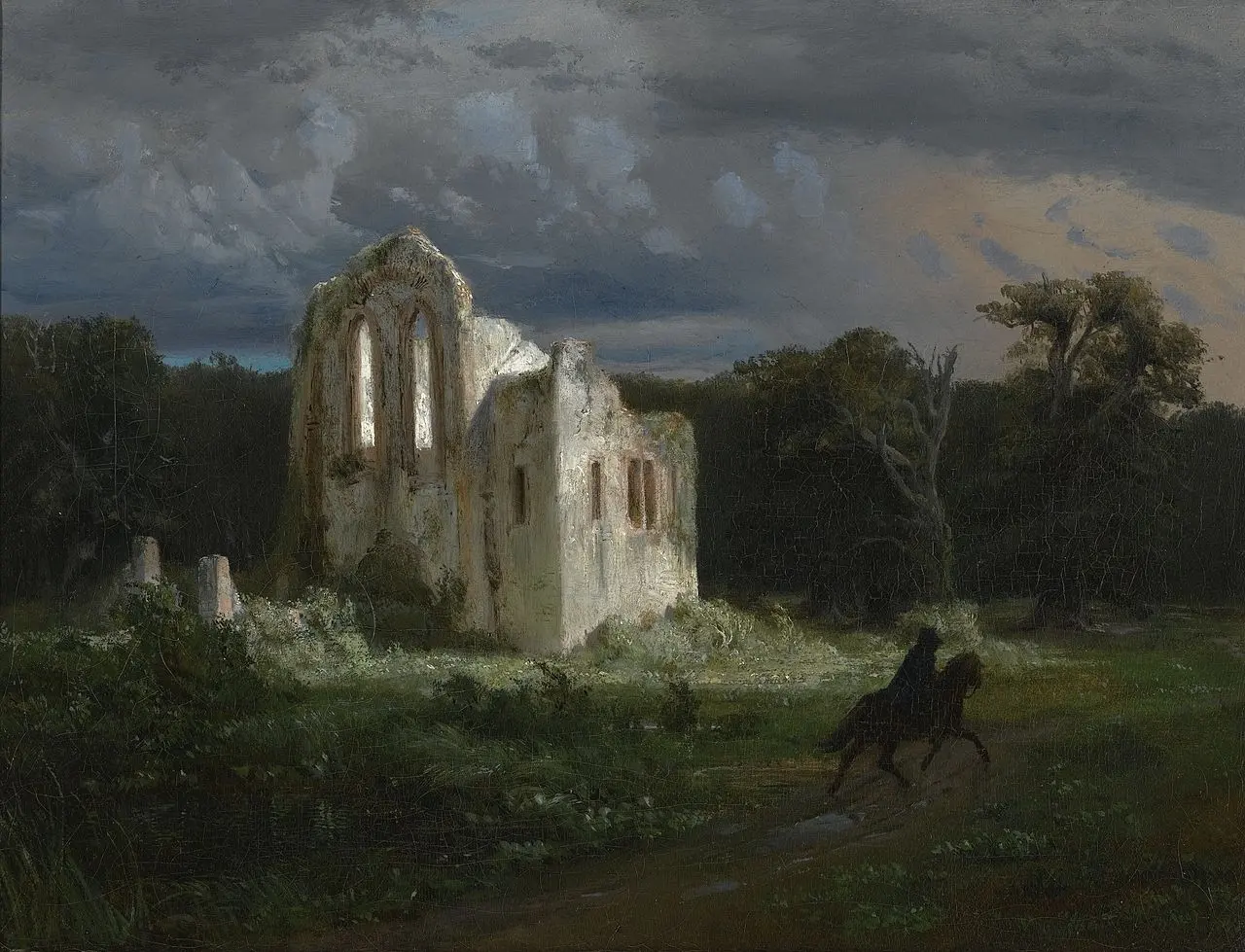
Arnold Böcklin
The Presence of Myth
Most painters treat mythology as subject matter. A story to illustrate, a figure to render accurately, a scene from Ovid arranged tastefully across a canvas. Böcklin treated it differently. For him myth wasn’t something to depict. It was something to believe in.
That distinction changes everything about how his paintings feel.
His creatures inhabit their landscapes with complete conviction. The centaur is not a classical reference — it is simply there, on that specific beach, in that particular afternoon light, as real and physical as the rocks behind it. The nymphs in the breaking waves aren’t allegory. They are bodies in water, caught in a moment. Böcklin painted the mythological world as if it had never stopped being true, as if the gods and monsters had simply been waiting for someone to look in the right direction.
What makes this unsettling, in the best sense, is that the landscapes themselves are so convincing. He wasn’t working in the soft impossible light of pure fantasy. His rocks are heavy. His water moves. His skies have weather in them. The world he paints is recognisably this one — Mediterranean, warm, ancient — and into that real world he places figures that shouldn’t exist, without apology or explanation.
The Isle of the Dead is the clearest example of what he could do. A rocky island, cypress trees, still water, a boat approaching in silence. Nothing about it is impossible. Everything about it is wrong. The wrongness accumulates slowly, the way unease does, until you realise the painting has been doing something to you that you didn’t notice while it was happening.
He wasn’t interested in the mythology of textbooks. He was interested in the part of mythology that never quite left — the suspicion that the world is older and stranger than daily life suggests, that something is present in certain landscapes that careful observation alone cannot account for.
You look at a Böcklin painting and the rational explanation is always available. And somehow never quite enough.